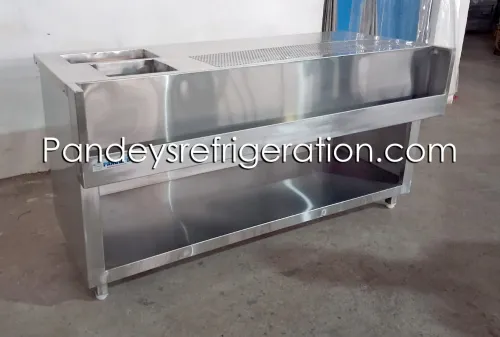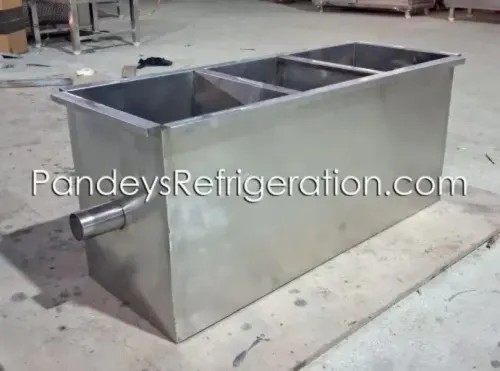
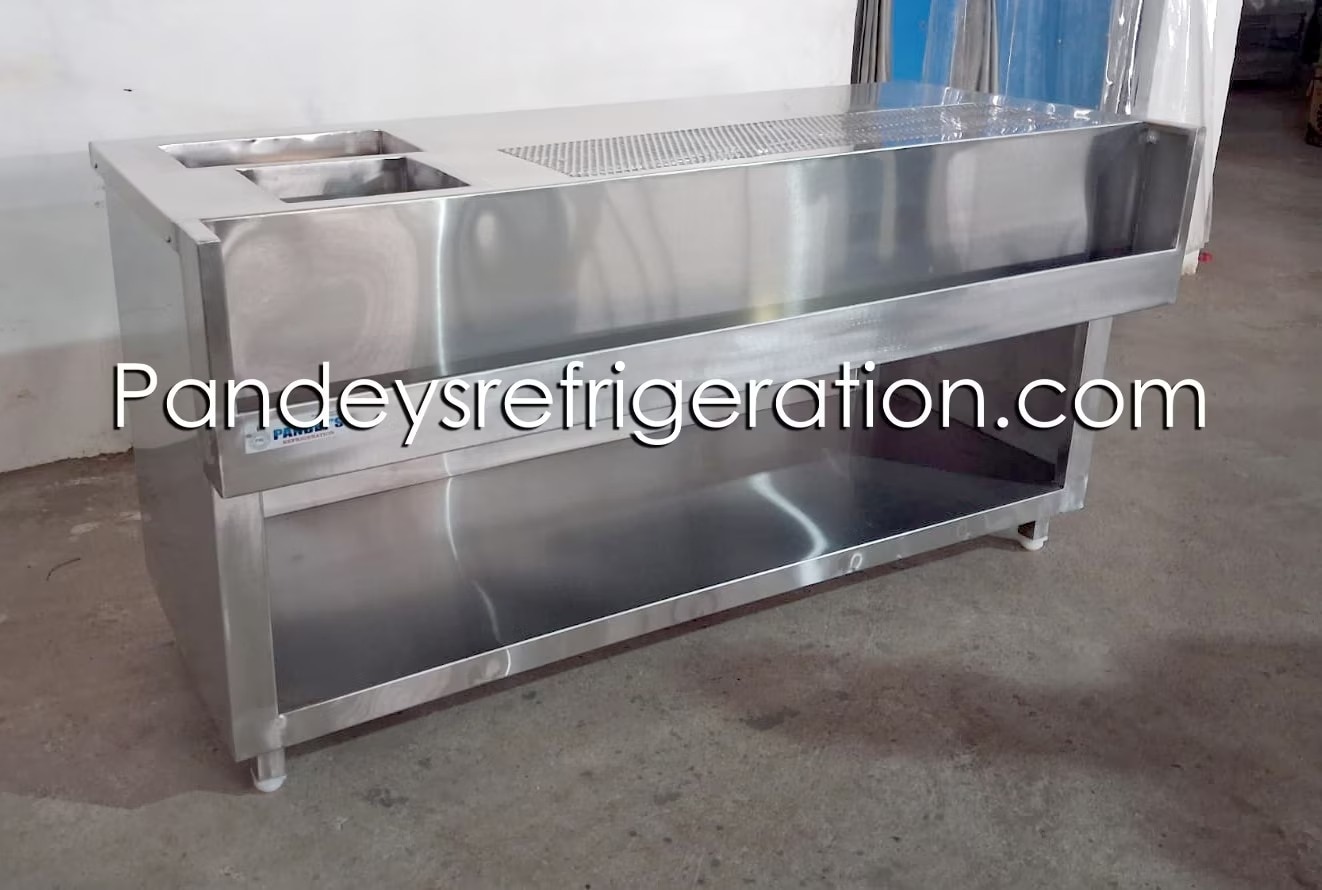
The choice between a fixed stainless steel counter and a portable bar affects service speed, storage, plumbing, cleaning, staff movement and future lounge changes. By the end, you will have a practical way to size the station, compare specifications, inspect a quotation and decide which setup suits your menu and operating pattern.
Key takeaways
- Choose a fixed counter for permanent service and concealed utilities.
- Choose a portable bar when the station must move between rooms or events.
- Plan ice, washing, waste and refrigeration around the bartender’s reach.
- Specify SS grade, access panels and cleaning clearances before ordering.
Fixed Counter or Portable Bar: Which Suits Your Lounge?
Choosing an SS cocktail mocktail counter or portable bar for lounges in Nagpur depends on whether service stays in one place. A fixed counter supports faster replenishment, larger equipment and concealed utilities; a portable event bar trades some capacity for relocation without major civil work.
| Option | Fixed SS counter | Portable bar |
|---|---|---|
| Mobility | Permanently anchored; best for a settled lounge layout | Moves between zones or events; use industrial locking casters and brakes |
| Service speed | Faster with plumbed sink, ice bin, speed rail and undercounter refrigeration | Slower when tanks, cables or quick-connects need handling |
| Capacity | More room for bottles, glasses, ice, waste and refrigeration | Usually less storage and drainage capacity |
| Installation | Requires accurate plumbing, electrical work and floor fixing | Minimal civil work, but needs protected water, waste and power connections |
| Storage | Larger enclosed cabinets and service access | Compact cabinets; caster clearance consumes space |
| Cleaning | Fixed trapped drain supports continuous washing and easier waste handling | Waste tanks need emptying, odour control and disinfection after service |
For bar beverage station options in Nagpur, choose a trapped drain for daily lounge operation and a removable tank for event-floor deployment only. Specify 304 stainless steel for ordinary food-contact work; select 316 for chloride-rich conditions, not by default. Keep mild-steel dust, galvanized parts and carbon-steel frames away from exposed surfaces.
A liftable counter without stabilising brakes is not genuinely portable. Before acceptance, test leaks, sink drainage, socket earth-leakage protection, refrigeration pull-down, caster brakes and removable-panel access. Portable units suit reconfigurable lounges; fixed counters suit continuous, high-volume service.
Design the Bartender’s Workflow Before Choosing Dimensions
Keep the bartender’s primary reach within 600 mm and the service aisle at least 1,000–1,200 mm wide. That distance lets two staff pass without turning into the guest side or colliding with open refrigerator doors. A cocktail counter for commercial bar service needs a work sequence, not merely a long stainless top.
| Option | Workflow arrangement | Dimension or control |
|---|---|---|
| Fixed counter | Ice, speed rail, garnish station, shaker space, glass landing and waste run in one line | Allow 1,200–1,500 mm of station width per bartender |
| Portable bar | Keep only fast-use items at the front; store reserve bottles and glassware below or behind | Lock casters, protect a 900–1,000 mm working aisle, and leave 300 mm for cable and drain access |
| High-volume station | Place glasswasher or three-compartment sink beside a drainboard, away from fruit and shaking space | Size it from peak glasses per hour, not counter length |
Specify the workflow in this order:
- Store bottles in a speed rail within one arm’s reach, with reserve stock outside the working zone.
- Place the ice bin between bottle storage and the mixing area; provide a separate, dry landing area for clean glasses.
- Keep garnish preparation on a defined section with its own waste container, not beside the hand sink or glass landing.
- Fit a dedicated hand-washing sink with tempered water, soap and hygienic drying; a dump sink is not a hand sink.
- Separate dirty-glass return from clean-glass storage, and give waste a 20–30 litre removable bin with direct access.
A stainless steel mocktail counter comparison in Nagpur should inspect the worktop, splashback, legs, undershelf, sink compartment and service panels separately. Specify 304 stainless steel for normal beverage contact, seal exposed joints, and keep refrigerator ventilation and removable service panels accessible.
Specify Steel, Utilities and Access Instead of Buying by Length
A stainless steel mocktail counter comparison in Nagpur must separate each component, not accept “all SS” or a price per running foot. State 304 stainless steel for food-contact surfaces; choose 316 for chloride-rich environments, not ordinary beverage service by default. Keep mild-steel frames, galvanized parts and grinding dust away from exposed stainless.
Fixed counter | Portable bar Worktop | Level, continuous surface with sealed welds and coved corners | Rigid top with sealed joints and protected edges Frame and base | Welded stainless frame; no unsealed plywood or open tube ends in wet zones | Rigid base with industrial locking casters and stabilisation Services | Concealed water, waste and electrical routes with removable access panels | Protected flexible connections and a defined electrical connection Ventilation | Rear or front airflow path for refrigerators | Ventilation path that remains clear after rolling into position
The drawing and quotation must identify:
- Guest-side and service-side dimensions, counter height, splashback, undershelf, sink-compartment size, bowl dimensions, glass-landing area and bottle-speed-rail position.
- Ice-bin capacity, waste-bin volume, refrigerator ventilation clearance, door swing, caster footprint and the route from delivery entrance to final position.
- Water-inlet size and location, trapped waste outlet, drain fall, electrical load, socket locations, earthing and earth-leakage protection.
- Sheet thickness, weld finish, panel material, drawer runners, seals and which parts are removable for cleaning or repair.
Require commissioning tests: leak-test supply and waste lines, confirm sink drainage, test every socket and earth-leakage device, record refrigerator pull-down at the stated ambient, check caster brakes and door alignment, and remove each service panel and filter without dismantling the bar.
Compare Fixed, Mobile, Back-Bar and Modular Stations on Site
Choose by the busiest 60 minutes, not the counter’s running length. A cocktail counter for commercial bar service must match your menu complexity, peak covers, bartenders on shift and drinks per hour; a portable event bar must also justify its storage and transport burden.
| Option | Best fit | Selection test |
|---|---|---|
| Fixed station | Daily lounge service with high volume and fixed utilities | Choose it when two or more bartenders need fast access to ice, sinks, glass storage, refrigeration and waste handling. |
| Mobile station | Events, terraces or changing service points | Accept it only with industrial locking casters, a rigid base, protected water and waste connections, stable ice storage and a defined electrical connection. |
| Back-bar station | Bottles, glassware, refrigeration and replenishment behind the main counter | Use it when the front station needs clear preparation space and staff can restock without crossing the service path. |
| Modular station | A growing menu, variable covers or future event deployment | Select connectable modules when you may add refrigeration, garnish preparation, bottle storage or a second service point. |
Compare bar beverage station options in Nagpur against actual glass volume. A high-volume lounge needs an underbar glasswasher or three-compartment sink sized for peak demand, plus a drainboard or landing area; washed glasses must not share a wet surface with waste or fruit preparation.
Keep clean ice, used glasses, garnishes and refuse in separate zones. Pandey's Refrigeration can use your peak drinks-per-hour figure to distinguish a genuinely mobile unit from a counter that is merely relocatable. For future events, confirm every module fits through doors, stores securely and reconnects without unsafe improvisation.
Related products
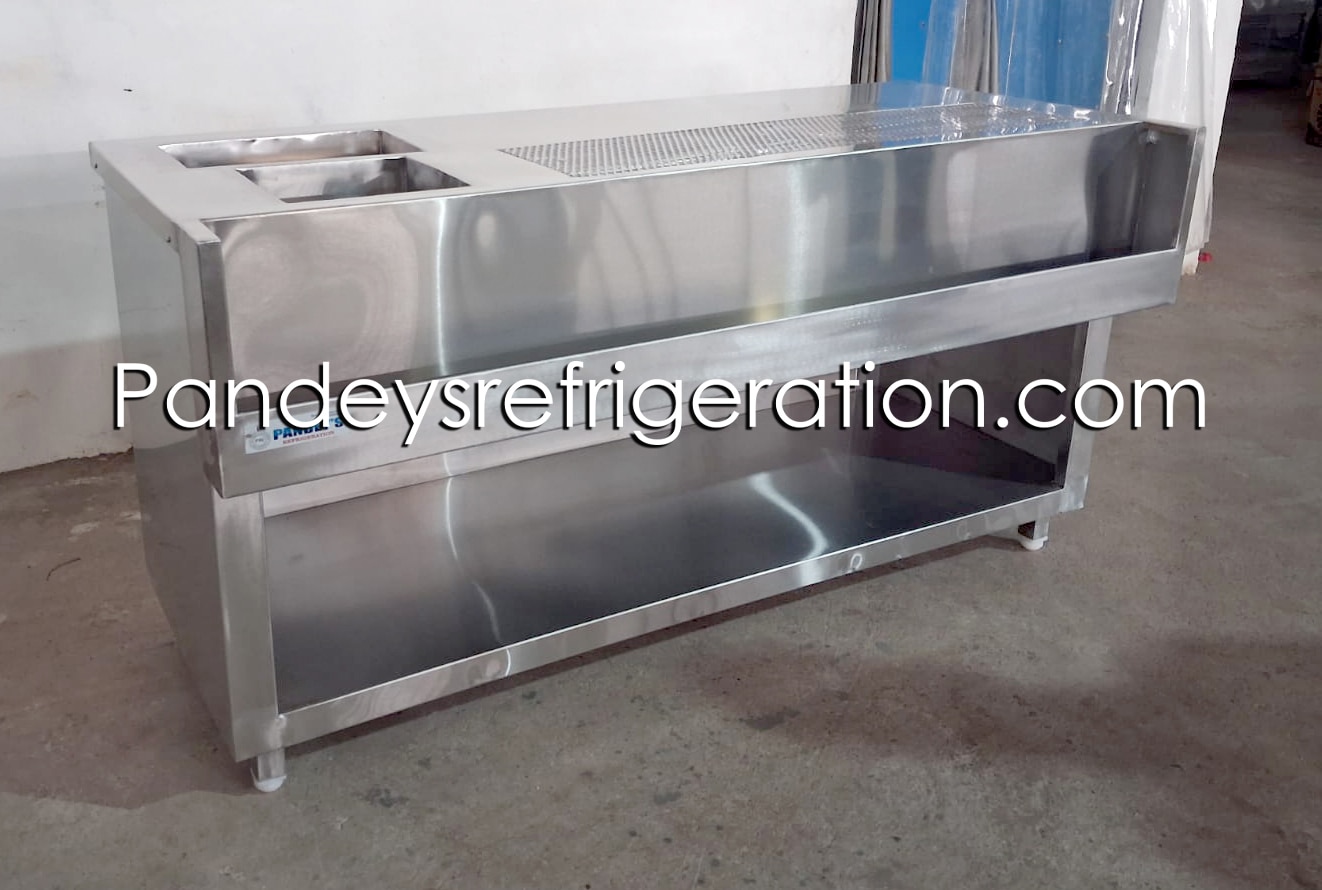 | Hotel Equipments SS Cocktail Mocktail Counter for Bar Section By Pandeys Hotel Kitchen Equipment A Stainless Steel Cocktail Mocktail Counter from Pandeys Hotel Kitchen Equipment is designed to deliver... View product → |
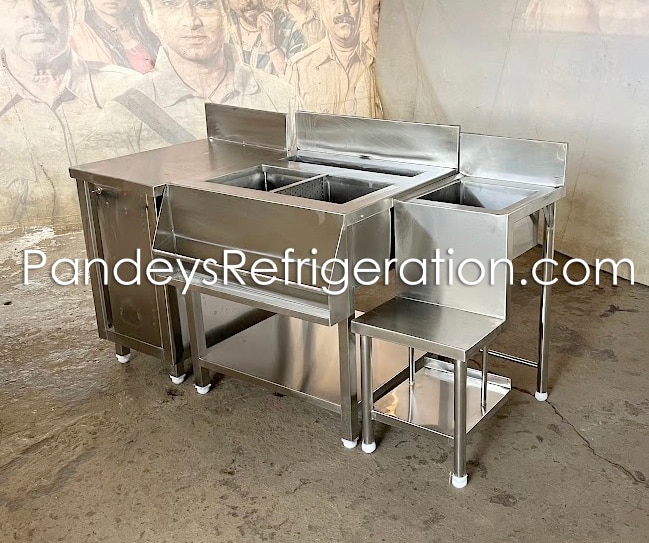 | Hotel Equipments If you're looking for a Stainless Steel (SS) Bar Work Station from Pandey's Hotel Kitchen Equipment, it is designed for efficient beverage... View product → |
Inspect Commissioning, Cleaning and Long-Term Serviceability
Do not sign the delivery note until the station passes a live service test. An SS cocktail mocktail counter or portable bar for lounges in Nagpur must work under water, power, cooling and movement—not just look level and polished.
1. Confirm the specified steel grade on the quotation and inspect every surface. Food-contact areas are usually 304 stainless steel; use 316 where chloride exposure justifies its extra cost. Reject rust staining, grinding dust, open tube ends, exposed screw heads and unsealed welds.
2. Fill the sink and run the supply lines while checking every joint for leaks. Pour water into the bowl and confirm rapid drainage without pooling, odour or backflow; test the trapped building drain or inspect the removable waste tank for overflow capacity and a secure lid.
3. Test each socket with the installed earth-leakage protection, then run the intended blender, ice machine and refrigerator load. Record refrigeration pull-down at the stated ambient temperature instead of accepting a cold display alone.
4. Lock every industrial caster and push the bar from several directions. It must not rock, creep or flex; check that doors align, drawers close and ice compartments remain stable during movement.
5. Remove panels, filters, bins and access covers using normal tools. Confirm you can reach pumps, drains, refrigeration components and electrical parts without dismantling the bar.
6. Photograph the accepted condition and record model numbers, filter types, cleaning chemicals and service intervals.
Clean spills immediately, wash and sanitise sinks and waste tanks daily, clear drains, and keep stainless steel free from carbon-steel tools. Compare these service provisions across bar beverage station options in Nagpur before final payment.
Frequently asked questions
Is a fixed counter or portable bar better for a Nagpur lounge?
Choose a fixed counter for permanent service, higher capacity, concealed utilities and faster replenishment. Choose a portable bar when you need relocation without major civil work.
What dimensions should you plan for a cocktail or mocktail counter?
Plan dimensions around the bartender’s workflow, including ice, refrigeration, washing, waste, storage and customer service. Measure equipment and utility access before fixing the counter length.
What should you specify besides the counter length?
Specify stainless-steel grade and finish, sink and drain arrangement, water and electrical points, refrigeration, ice storage, waste handling, access panels and cleaning clearances.
How do you compare fixed, mobile, back-bar and modular beverage stations?
Compare each option on capacity, mobility, utility connection, storage, equipment fit, installation work and the ease of cleaning or replacing components on site.
What should you inspect during commissioning?
Check level installation, stable doors and shelves, sealed joints, drainage, water leaks, electrical protection, refrigeration performance, access to service parts and cleanable surfaces.
Keywords