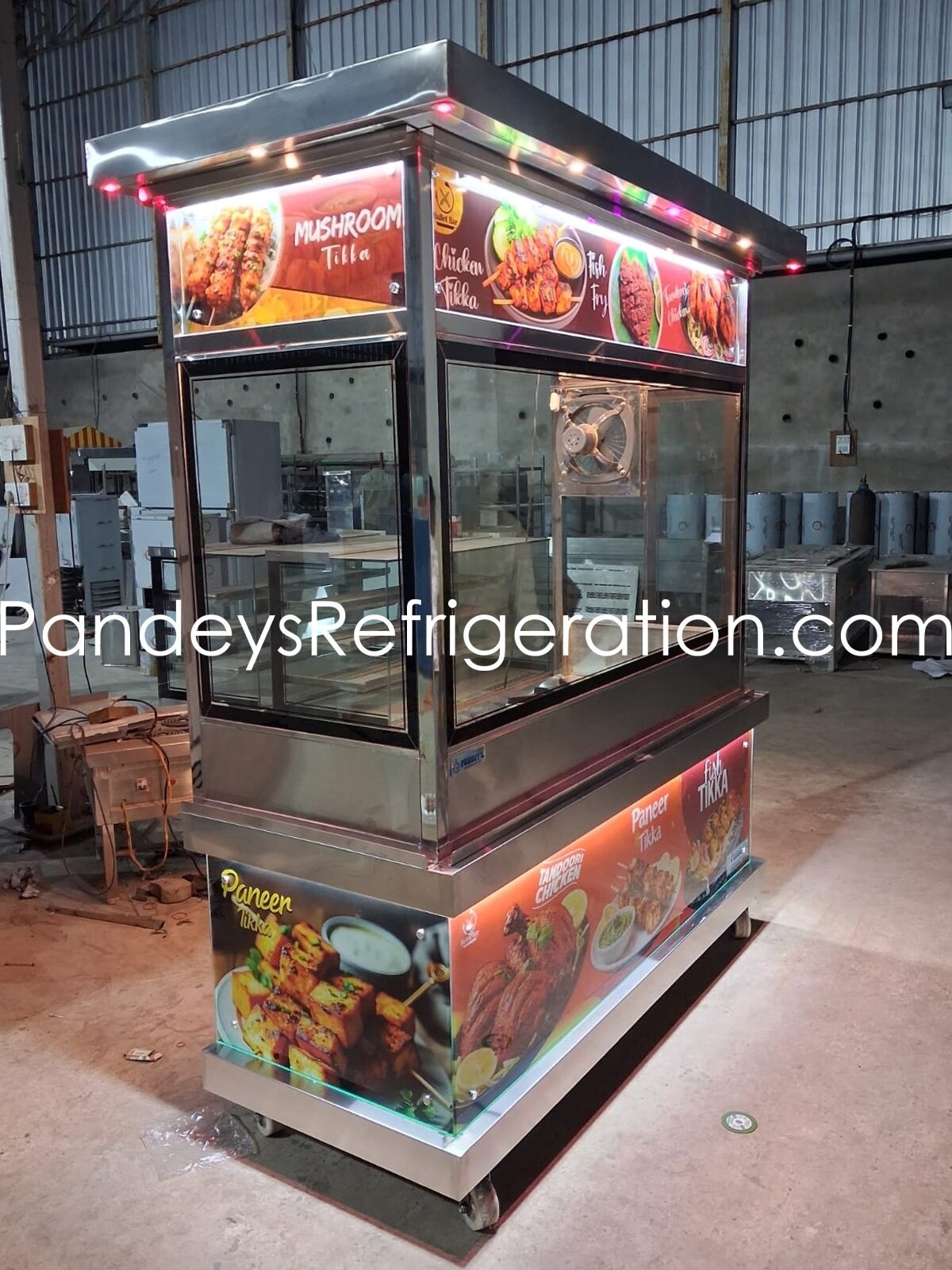
Nagpur’s heat, intense sun, monsoon rain, dust, and shifting wind can interrupt grilling, expose food, and make the work position uncomfortable. By the end, you will be able to separate weather shelter from exhaust design, size the counter for your service, check its site and safety requirements, and compare specifications before ordering.
Key takeaways
- Use a canopy to reduce sun, dust, glare, light rain, and heat exposure.
- Match fuel type with extraction, clearance, gas safety, and fire-suppression needs.
- Leave service aisles clear and size the counter for peak cooking volume.
- Choose food-grade stainless steel with smooth, accessible surfaces for hygiene.
What protection does a canopy provide during Nagpur’s outdoor service conditions?
A canopy shields cooks, serving staff, customers, food, and equipment from Nagpur’s intense sun, glare, light rain, airborne dust, and falling debris. It reduces heat on food-holding surfaces and equipment, helping service continue instead of stopping whenever weather changes.
The phrase barbecue counter for canopy benefits in nagpur means operational continuity, not merely having a roof overhead.
Specify these drainage and airflow details before fabrication:
- Set the canopy high enough for comfortable work and open enough at the sides to support natural airflow without directing smoke into queues or dining areas.
- Give the roof a deliberate fall toward a drip edge, gutter, or designated discharge point.
- Keep discharge away from grates, food, electrical controls, serving surfaces, walls, and customer walkways.
- Add splash control where rainwater can rebound from paving or collect at the counter-to-wall junction.
- Provide drainage that clears monsoon water quickly, then dry the canopy, shelves, controls, and joints after service.
- Use protective covers only when equipment is cool and dry; trapped moisture under a cover causes corrosion, odour, and dirty contact surfaces.
A weather canopy is not a cooking-exhaust system. It does not capture smoke, carbon monoxide, cooking heat, or grease-laden vapour; charcoal and gas stations still need engineered extraction, safe discharge, and fire controls.
Keep the cooking area open to suitable airflow, protect food from dust and debris, and never let rain drip onto hot grates or wet electrical equipment.
How should you match fuel, ventilation, and fire protection to the station?
Charcoal suits smoke and flavour, but it produces grease-laden smoke, heat, and ash that demand the strongest extraction and cleaning plan. Gas gives controllable heat and faster recovery. Electric suits an indoor-adjacent station when the supply has adequate capacity and weather-protected controls.
Wood-fired grilling belongs only where fuel storage, ash handling, emissions control, and fire approval are acceptable.
| Fuel | Main advantage | Principal demand |
|---|---|---|
| Charcoal | Smoke and flavour | High-capacity extraction, spark control, ash removal |
| Gas | Fast recovery and adjustable heat | LPG separation, protected supply, leak control |
| Electric | Cleaner operation near occupied areas | Adequate electrical capacity and earthing |
| Wood | Traditional fire and flavour | Fuel storage, emissions, ash, and fire controls |
A barbecue canopy for canteen service must never discharge smoke into a covered queue or dining area. Ask for the exhaust volume, capture hood or extraction arrangement, make-up-air path, flue termination, spark arrestor where required, grease filters, removable grease trays, and carbon-monoxide control strategy. Open sides do not replace engineered ventilation or fire approval.
- Regulators outside heat exposure, protected hoses, documented leak checks, and an emergency shut-off reachable without entering the fire zone.
- Correctly rated fire extinguishers, a fire blanket, accessible extraction components, and trained staff.
- A sealed ash container and a defined disposal route for charcoal or wood ash.
Keep grease out of ordinary drains until the site’s grease-trap arrangement is confirmed. A canopy is weather shelter, not proof of safe combustion.
How do you size and place a commercial barbecue counter in Nagpur?
Size a commercial barbecue counter in Nagpur from demand, not available floor area. Calculate portions per hour, simultaneous skewers, batch recovery time, queue length, and cooks per shift; then specify grill area that handles peak loading without crowding.
Set the worktop near elbow height, the serving pass lower and guest-facing, and provide protected landing space for cooked food.
Keep raw-food refrigeration and marination beside the cooking zone, with a separate finished-food pass to prevent cross-contamination. Add utensil storage, waste collection, shelves, lockable storage, and a fuel location that staff can reach without crossing the queue. Use castors only for controlled repositioning; fixed legs suit gas lines, uneven outdoor surfaces, and safer anchorage.
Survey the site before ordering:
- Measure the narrowest gate, access route, turning radius, banquet-lawn approach, customer circulation, wall clearance, and roof clearance.
- Mark drainage fall and rainwater paths so water cannot discharge onto the grill or electrical controls.
- Locate electrical points, gas lines, and the cylinder store; keep raw and cooked food on opposite sides of the workflow.
| Option | Best fit | Reject it when |
|---|---|---|
| Canopy counter | Managed outdoor cooking and serving | Fuel storage or airflow is unsafe |
| Portable griller | Low-volume, temporary service | You need refrigeration, storage, or queue control |
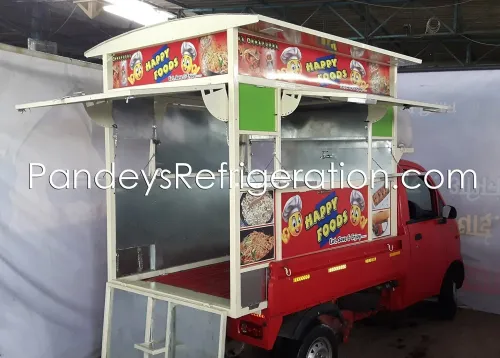
| Food-truck station | Mobile high-volume operation | Access or turning radius is limited |
| Indoor exhaust-equipped line | Smoke-sensitive venues | No compliant exhaust route exists |
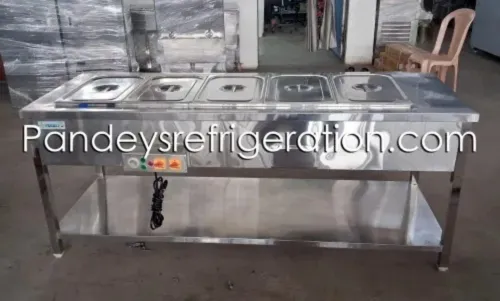
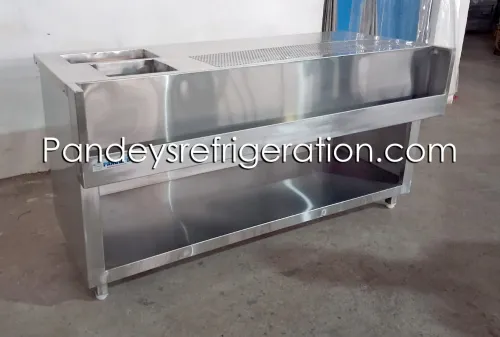
| Buffet counter or roofed worktable | Holding or prep only | You need integrated grilling |
Low ceilings, smoke-sensitive venues, low volumes, or unsafe fuel arrangements make the counter unsuitable.
Which stainless-steel specifications affect durability, hygiene, and maintenance?
Cleanable surfaces, routine corrosion resistance, and continuous welded worktops with upstands are the stainless steel barbecue counter benefits you notice every day. Stainless steel is not automatically hygienic: rough welds, open seams, damaged finishes, and inaccessible grease pockets still retain soil and bacteria.
Ask the fabricator to state:
- Grade, sheet thickness, surface finish, weld treatment, and approved cleaning chemicals
- Frame construction, insulation, and proof that the frame—not thin cladding—carries equipment and canopy loads
- Canopy structure, roof fall, drip edge, anchorage, and whether the canopy is removable or fixed
- Access to grease trays, filters, spark-control parts, and rainwater discharge points
| Grade | What it handles | When it applies |
|---|---|---|
| 304 stainless steel | Routine food residues, humidity, and rain | Common inland choice for Nagpur |
| 316 stainless steel | Greater resistance to chloride attack | Choose it for salt exposure or aggressive chloride chemicals, not automatically for Nagpur |
For an ss barbecue counter canopy in Nagpur, clean grates, grease trays, drip pans, canopy surfaces, filters, and spark-control parts on a written schedule. Remove grease before it becomes a fire load, and never let bleach or chloride cleaner dry on the metal. Inspect rough welds, open seams, stagnant-water marks, and hidden grease pockets.
Pandey's Refrigeration can help you request a written fabrication, installation, cleaning, spare-parts, warranty, and after-sales scope, so you compare maintainability rather than appearance alone.
Related product
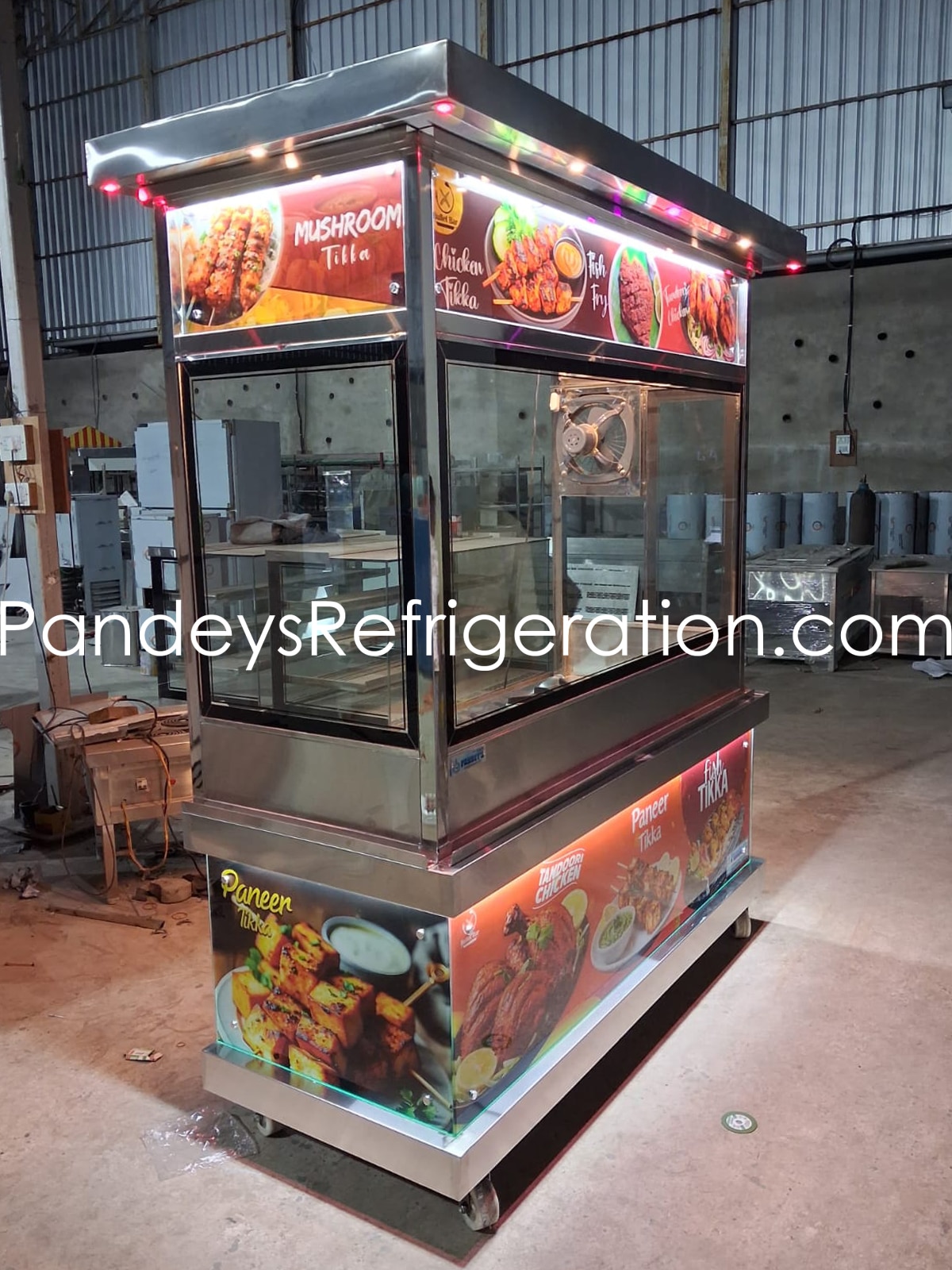 | Hotel Equipments SS Barbeque Counter with Canopy The SS Barbeque Counter with Canopy by Pandeys Hotel Kitchen Equipment is a premium live cooking station designed to deliver an exceptional grilling... View product → |
What should you verify before commissioning and operating the station?
Do not approve the station until the site file contains local permissions, FSSAI food-safety procedures, equipment manuals, and an emergency contact sheet. A canopy is not fire approval, and it does not replace a compliant cooking-exhaust system.
- Check LPG regulators, hose routing, leak testing, cylinder upright storage, heat separation, and emergency shut-off access.
- Verify electrical earthing, residual-current protection, weather-resistant sockets and controls, and protected cable routes.
- Confirm fire clearances from the canopy, walls, fabric, cylinders, doors, windows, and customer queues.
- Keep the correct extinguisher, fire blanket, and first-aid kit visible and reachable.
- Provide inspection access to the hood, flue, filters, baffles, spark-control parts, and grease trays.
- Connect grease collection to the site’s approved grease-trap arrangement; never discharge barbecue grease directly into a drain.
Place handwashing and utensil points away from smoke. Protect garnishes and finished food from dust, use separate raw and cooked tools, preheat the grill, record cooking temperatures, hold cooked food safely, and keep hot surfaces beyond guest reach.
| Decision factor | Lower-looking choice | Cost or risk to check |
|---|---|---|
| Purchase | Basic counter | More fuel, labour, repairs, or cleaning |
| Fuel | Charcoal | Slower setup, ash removal, and weather downtime |
| Labour | Manual service | More carrying, monitoring, and queue time |
| Maintenance | Infrequent cleaning | Grease fires, corrosion, and blocked extraction |
Record canopy, flue, and filter cleaning; monsoon drying; LPG leak checks; and ash removal. Proceed only when airflow, fuel, capacity, access, drainage, and emergency controls work as one system.
Frequently asked questions
What protection does a barbecue counter canopy provide in Nagpur?
It shields staff, customers, food, and equipment from intense sun, glare, light rain, airborne dust, and falling debris while reducing heat on work surfaces.
How should you match fuel, ventilation, and fire protection to a barbecue station?
Identify whether the station uses LPG, charcoal, or electricity, then provide the required clearances, ventilation or extraction, gas controls, and suitable fire protection for that fuel.
How do you size and place a commercial barbecue counter in Nagpur?
Size the cooking surface, preparation space, storage, and holding area for peak demand, then preserve safe staff movement, customer separation, access for cleaning, and clearance from combustible materials.
Which stainless-steel specifications affect barbecue counter durability and hygiene?
Compare the grade, sheet thickness, welded-joint finish, edge treatment, adjustable feet, drainage, and surface accessibility; smooth, corrosion-resistant construction simplifies cleaning and maintenance.
What should you verify before commissioning and operating the station?
Check installation clearances, gas or electrical connections, extraction performance, fire equipment, drainage, stability, surface cleanliness, staff procedures, and required inspection documents before service begins.
Keywords