The right setup depends on whether your business earns from reaching customers or from producing large volumes for delivery. By comparing capacity, permissions, equipment, recurring costs and payback, you can choose between a mobile unit and a fixed kitchen without relying on the purchase price alone.
Key takeaways
- Choose a food van when location-driven orders exceed fixed-site demand.
- Confirm RTO registration, FSSAI licensing, parking permission and LPG safety requirements.
- Separate raw, cooked and waste flows to prevent cross-contamination.
- Calculate break-even using daily orders, contribution margin and operating days.
Which catering model suits a food van or a fixed kitchen?
Choose a food van when the location itself generates orders. Choose a fixed kitchen when production capacity, storage and repeat contracts generate the margin.
| Option | Where food is sold | Production and movement | Operating trade-offs |
|---|---|---|---|
| Food van | Roadside pitches, festivals, pop-ups, weddings with live service and events where customer access is part of the offer | Travels to customers; suits smaller, fast-finish menus rather than bulk batch cooking | High visibility and mobility; limited storage, staffing space, water, cleaning capacity and service speed; expansion requires another vehicle or support kitchen |
| Fixed kitchen | Corporate lunches, recurring institutional contracts, delivery-only production and weddings that transport prepared food to the venue | Produces larger batches in one location and sends food out; does not move during service | Lower customer visibility but better refrigeration, storage, dishwashing, staffing, cleaning and high-volume consistency; expansion is easier through equipment and shifts |
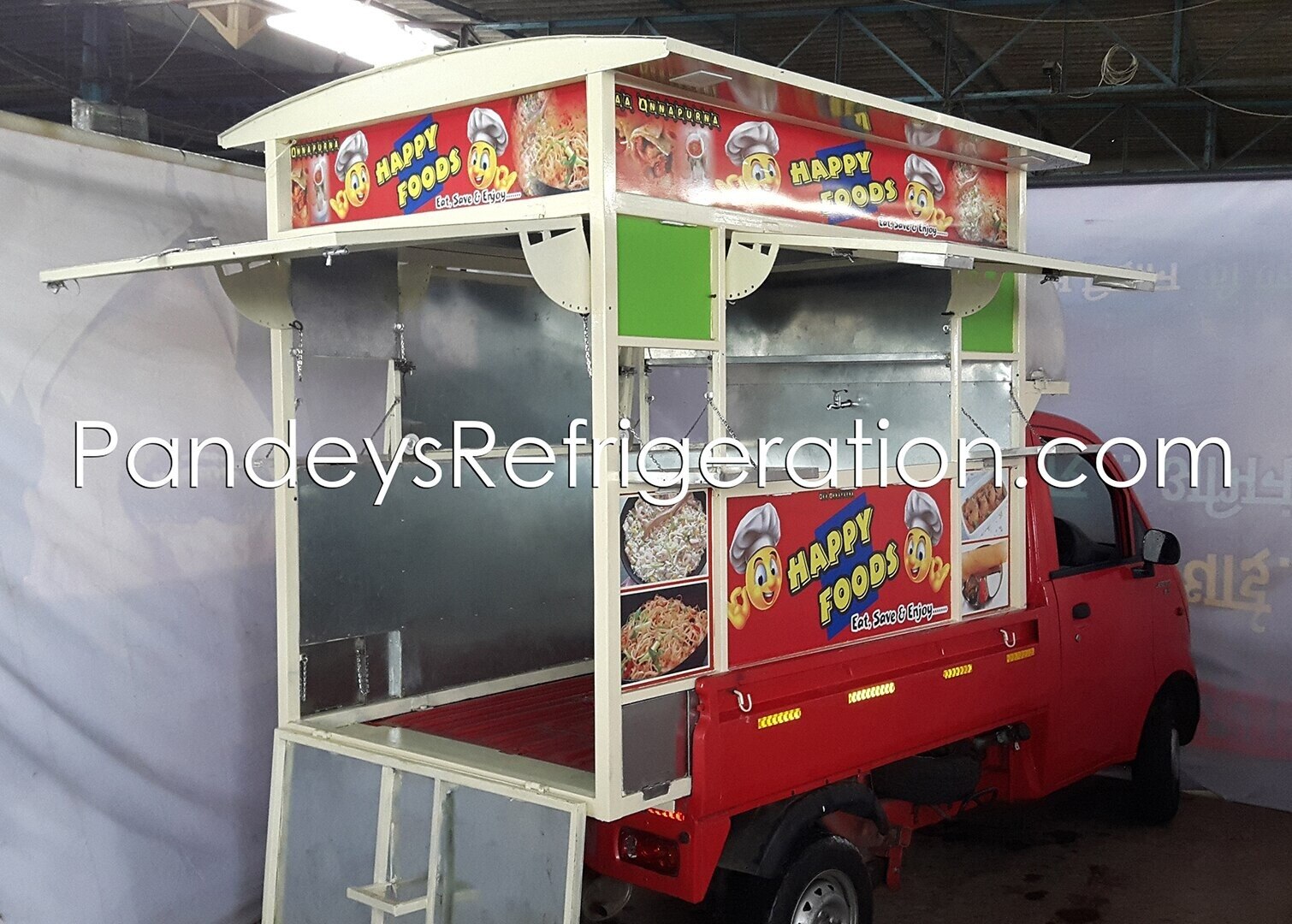
A van’s compact layout can slow service when staff must share one aisle, and bulk cutting, marination, batter production and cold storage consume capacity needed during service. It should travel with prepared components from a commissary kitchen, then finish and serve them safely.
A fixed kitchen prepares food for transport; it does not bring the selling point to the customer. That distinction matters when comparing a custom food van or fixed kitchen in Nagpur.
Use this test: select the van if changing location measurably increases sales. Select the fixed kitchen if larger batches and repeat orders increase sales. A hybrid—fixed commissary kitchen plus service van—often handles bulk preparation and mobile finishing better than one compact vehicle doing everything.
What permissions and site constraints apply to a Nagpur food van?
FSSAI registration or a licence does not authorise you to park and sell anywhere. Treat each approval as a separate decision:
1. Classify the food business by activity and turnover, not by mobility. From 1 April 2024, registration covers annual turnover up to ₹1.5 crore where the activity and conditions fit; larger operations need a state or central licence.
2. Keep the vehicle legally roadworthy. Confirm registration, permitted vehicle modifications, fitness certification, insurance and LPG installation requirements before fabrication.
3. Obtain local-body permission and check municipal vending rules for the specific public road. Private premises require the landowner’s written consent, while a ticketed event site can impose organiser approval, venue restrictions, event permission, signage limits and prescribed LPG arrangements.
4. Inspect the site before buying. Confirm road access, turning radius, parking duration, queue space, power access, emergency access and waste collection. A vehicle that fits the menu can still fail because customers block a fire route or the van cannot turn into the site.
A mobile catering kitchen in Nagpur needs a potable-water tank sized for peak service, a hand-wash sink, utensil-washing capacity, a wastewater holding tank and a defined disposal point. Never discharge grey water onto a road or storm drain. Tank capacity also consumes payload, alongside staff, LPG and equipment.
Public-road vending, private-premises service and a ticketed event are different operating situations; obtain permission for the exact location and service model. Confirm the restrictions in writing.
How should you design capacity, safety and workflow?
Design capacity around the menu, not the vehicle’s empty floor area. A mobile unit must fit cooking, refrigeration, handwashing, utensil washing, storage and staff movement during peak service.
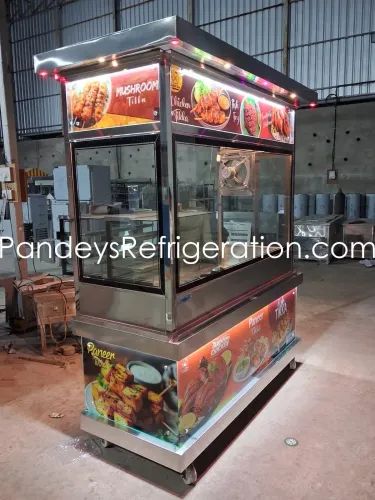
For a custom stainless steel food van in Nagpur, specify 304 stainless steel for food-contact worktops, sinks and preparation surfaces; state sheet thickness, weld finish and sealed seams in writing.
Calculate payload after adding staff, LPG cylinders, refrigeration, cooking equipment, generator, storage and 100–250 litres of potable water, plus a separate wastewater tank. Check the vehicle’s gross vehicle weight rating and each axle limit. Overloading can make a spacious-looking van unsafe or non-compliant.
Use a commissary or fixed kitchen for bulk cutting, marination, batter production and cold storage when the van lacks room or washing capacity. Keeping these tasks onboard reduces aisle clearance, consumes service water and refrigeration, and increases cross-contamination risk.
Specify these safety systems before fabrication:
- Commercial exhaust hood sized for the burners, fryer or griddle, with make-up air; a domestic chimney is not commercial ventilation.
- Accessible LPG isolation valves, secure ventilated cylinder storage and suitable fire extinguishing equipment.
- Separate clean-water and wastewater tanks, with a defined emptying and cleaning method.
- Non-slip floors, sealed joins and enough clearance to clean behind equipment.
A fixed kitchen supports larger refrigeration, bulk storage, dishwashing, drainage, exhaust ducting and higher-volume preparation. Choose a mobile catering kitchen in Nagpur only when the menu fits its payload, water and workflow limits.
How do you calculate setup cost and break-even point?
Budget ₹5–10 lakh for a basic converted or used vehicle, ₹10–25 lakh for a new custom commercial food van, and above ₹25 lakh for a heavily equipped van.
| Option | Indicative budget | Exclusions |
|---|---|---|
| Used or converted van | ₹5–10 lakh | GST, upgrades and some compliance work |
| New custom food van | ₹10–25 lakh | GST, upgrades and licence-related work |
| Heavily equipped van | Above ₹25 lakh | Final equipment and installation changes |
| Small fixed kitchen | ₹8–20 lakh | Civil work, rent deposit and electrical upgrades |
Use this food van setup cost in nagpur template and obtain current vendor quotations:
- Vehicle budget: chassis or vehicle, registration, fitness, permits and insurance.
- Build budget: fabrication, cooking equipment, refrigeration, exhaust, water tanks, sinks and electrical system.
- Power and launch budget: generator or battery system, branding and working capital.
These ranges can exclude GST, refrigeration upgrades, generator capacity and branding.
Track recurring costs separately: fuel, parking, event fees, LPG, generator or electricity, water, maintenance, tyres, insurance, cleaning, staff travel, rent, utilities and repairs. A fixed kitchen replaces mobility costs with premises and service costs.
Break-even service days = fixed monthly costs ÷ contribution per service day.
Contribution per service day = sales − food − labour − travel − fuel − event − payment costs.
Base sales on expected events, average order value and gross margin. Subtract idle days, cancellations and repair closures instead of assuming daily trading. Compare the result with a fixed kitchen’s rent and utilities before choosing the lower purchase price.
What should you verify before choosing a fabricator or committing to expansion?
Before choosing a custom food van or fixed kitchen in Nagpur, make the supplier’s scope auditable. Ask every commercial food van manufacturer in Nagpur for:
- A written equipment schedule, chassis and GVW calculation, axle-load check, electrical single-line diagram, LPG layout and ventilation specification.
- A material-grade declaration naming stainless-steel grades, warranty terms, and confirmation of who handles inspection or registration-related documentation.
- Written exclusions for GST, registration, generator, refrigeration upgrades, branding, permits and site work.
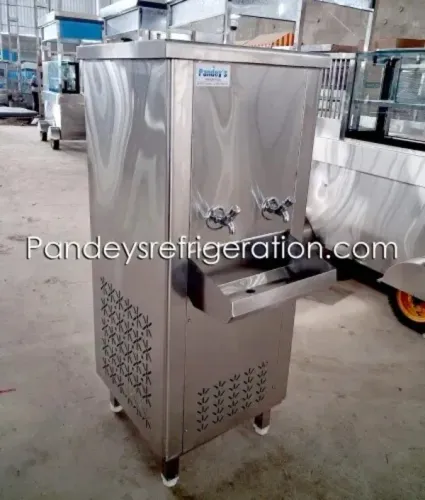
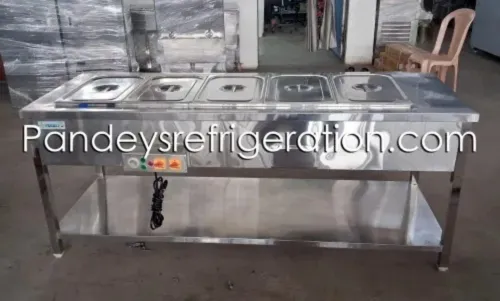
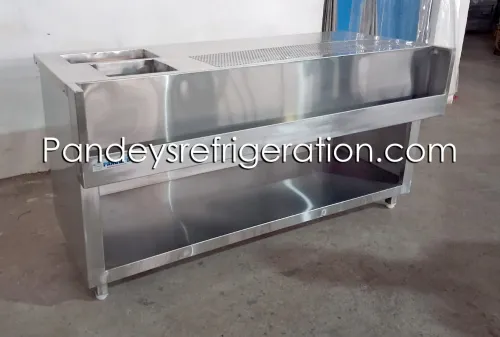
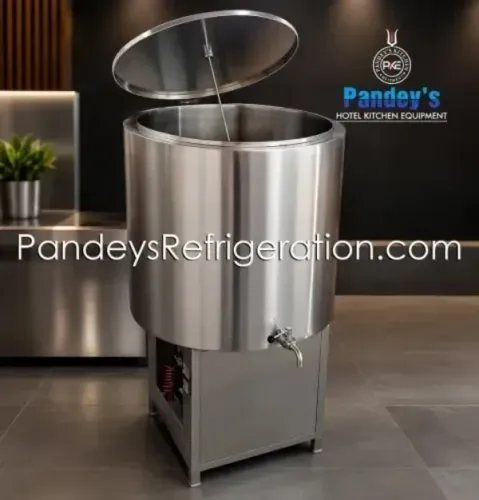
Pandey's Refrigeration can be compared with other suppliers when you need stainless-steel commercial equipment, sinks, storage, refrigeration or grease-control components. Verify vehicle-modification compliance and site permissions separately.
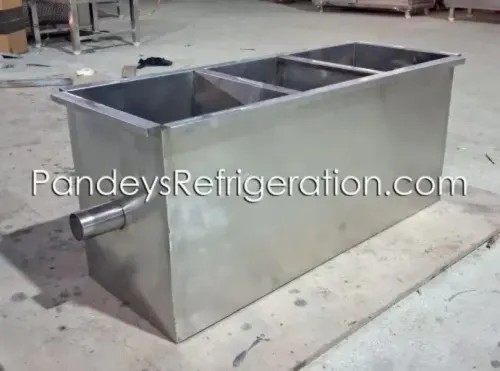
For a fixed kitchen, price every expansion item before signing: premises deposit, civil work, gas pipeline, electrical load upgrade, drainage, exhaust ducting, grease control, equipment installation and licences. Size the grease trap for peak discharge from sinks, dishwashers and preparation areas, not floor area.
Specify an accessible cover, inlet and outlet baffles, a cleaning route and a disposal schedule; a buried undersized trap turns blockages into expensive demolition.
| Option | Choose it when | Main proof required |
|---|---|---|
| Van | Mobility produces measurable orders | Utilisation, payload and permissions |
| Fixed kitchen | Volume, storage and repeat contracts produce margin | Capacity, site costs and contribution |
| Both | First unit’s utilisation and contribution are proven | Measured demand, not optimism |
Related product
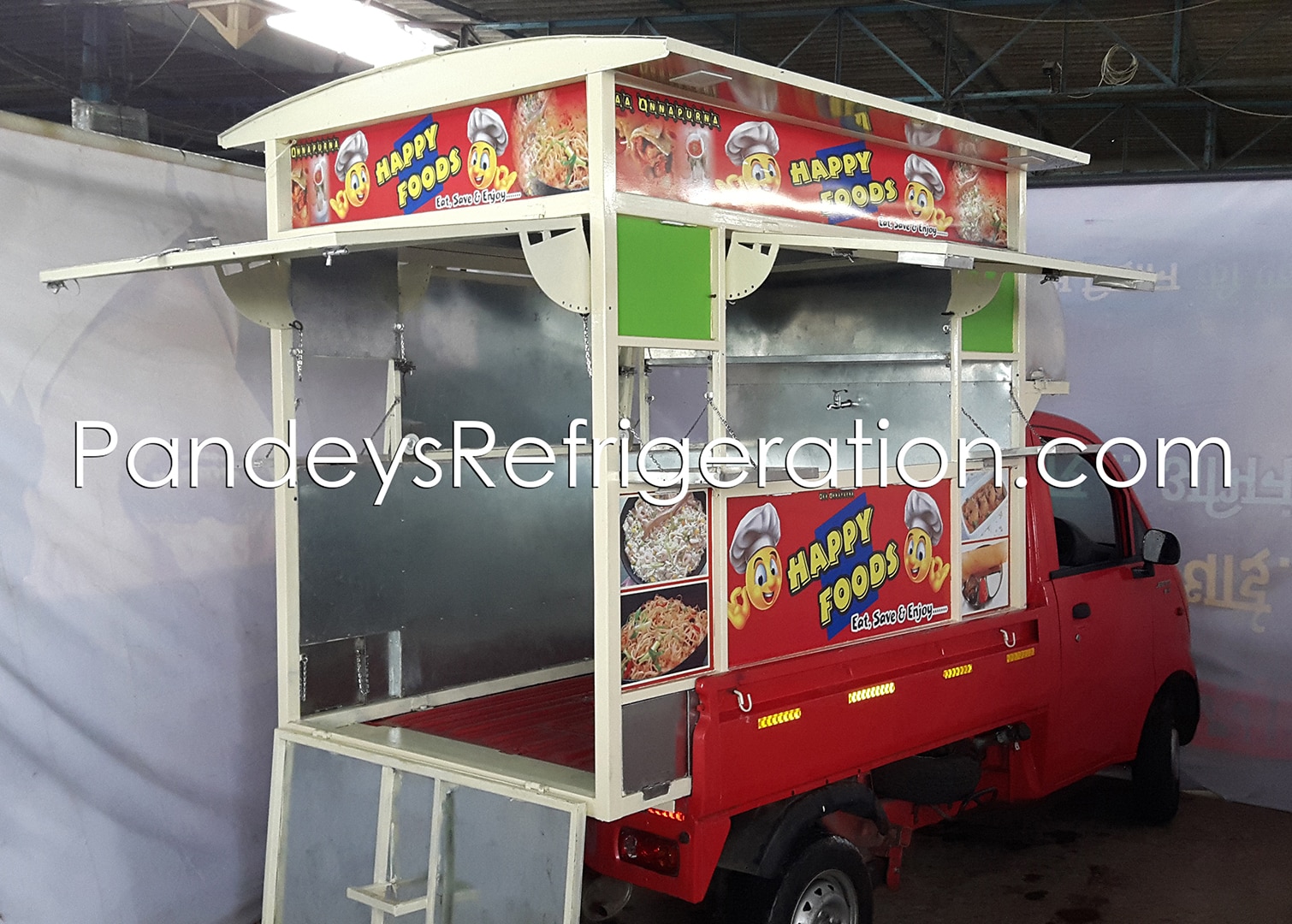 | Hotel Equipments Transform your food business with a Customized Stainless Steel (SS) Food Van from Pandeys Hotel Kitchen Equipment. View product → |
Frequently asked questions
Which catering model suits a food van or a fixed kitchen?
Choose a food van when location generates orders and mobility improves sales. Choose a fixed kitchen when production volume, storage and repeat contracts drive margin.
What permissions and site constraints apply to a Nagpur food van?
Check vehicle registration and fitness requirements with the Regional Transport Office, obtain the appropriate FSSAI licence, and secure written permission for vending or parking at each operating site. Confirm LPG installation, fire-safety and waste-disposal requirements before fabrication.
How should you design capacity, safety and workflow?
Size refrigeration, cooking equipment, water tanks, extraction and electrical supply against peak-hour orders. Keep raw ingredients, cooked food, staff movement and waste on separate paths, with washable stainless-steel surfaces and handwashing facilities.
How do you calculate food van setup cost and break-even point?
Add the vehicle, fabrication, equipment, licences, branding, insurance, utility installation and opening stock. Divide monthly fixed costs by contribution margin per order to find the monthly break-even order count.
What should you verify before choosing a fabricator or expanding?
Inspect welds, food-contact surfaces, insulation, drainage, gas and electrical documentation, service access, load capacity and warranty terms. Compare the fabricator's drawings with your menu, vehicle limits and expansion plan.
Keywords