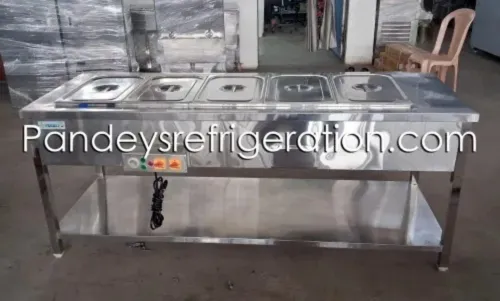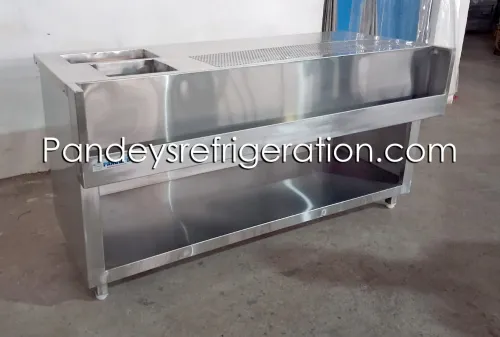
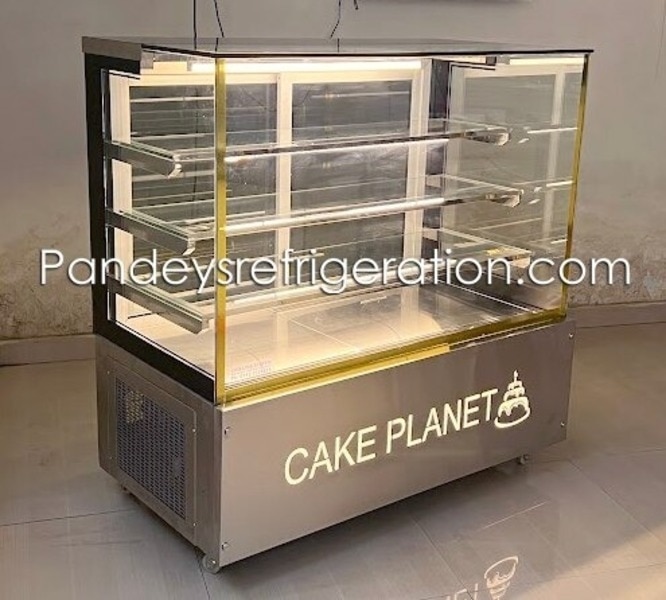
Nagpur hotels can use an SS cake display counter, but the right choice depends on the desserts, service point, cabinet temperature and loading pattern. By checking those factors, you can decide whether a refrigerated counter suits a lobby café, buffet, room-service area or banquet operation, and specify a unit that holds food safely in hot weather.
Key takeaways
- Use an enclosed refrigerated counter for cream-based desserts and hot lobby conditions.
- Specify cooling, glass, drainage and high-ambient performance before ordering.
- Keep cold-air paths clear when loading cakes, mousse and plated desserts.
- Test temperature recovery, visibility, access and drainage before signing off the counter.
Match the Counter to the Hotel’s Service Area and Dessert Mix
A hotel can use an SS cake display counter for hotels in Nagpur in a lobby café, buffet dessert station, banquet service area or room-service production zone. Choose an enclosed refrigerated cabinet for cream-based desserts; an open counter allows dust, customer traffic and Nagpur’s heat to destabilise product temperature.
| Dessert or product | Best display | Why it belongs there |
|---|---|---|
| Cream cakes, cheesecakes and mousse cakes | Refrigerated cabinet at 2–8 °C | Dairy, egg and high-moisture fillings need cold holding |
| Tiramisu, cream pastries and custard tarts | Refrigerated cabinet at 2–8 °C | Warm display conditions increase food-safety risk and soften structure |
| Ganache cakes with cream filling | Refrigerated cabinet | The filling and topping can melt or separate without cooling |
| Plain sponge, fruit loaf and some baked pastries | Dry showcase | Refrigeration can speed staling and toughen crumb |
| Fondant-covered celebration cakes | Dry showcase, if the filling is shelf-stable | Cold moisture can dull or damage decoration |
Confirm the recipe before choosing the cabinet. A fondant exterior does not make a cream-filled cake suitable for a dry showcase, and a “cake counter” label does not prove refrigeration.
Keep dry products in a clean, humidity-controlled glass case, away from raw foods and strong odours. For chilled desserts, verify the product’s centre with a calibrated probe; the cabinet thermostat alone cannot prove that a loaded cake is cold enough.
Specify Cooling, Glass, Drainage and High-Ambient Performance
A 2–8 °C air-temperature target is a sensible specification for a cooled cake counter for hotel desserts in Nagpur, but the display reading does not prove that the cake centre is cold enough.
Ask for a calibrated-probe test in a loaded cabinet, and record the set point, actual product temperature and recovery time after a door opens. Cream cakes, cheesecakes and mousse require refrigeration; dry cakes can stale faster when chilled.
Specify enclosed heated double glazing, not an open-front case. Heated double glazing, a controlled glass heater and intact magnetic door gaskets limit fogging during Nagpur’s monsoon humidity. The heater must not run continuously, because it adds heat to the cabinet and increases electricity use.
Request these specifications in writing:
- A declared operating ambient of at least 35 °C, preferably a high-ambient or tropicalized rating.
- A ventilated condenser with the manufacturer’s clearance, plus compressor placement that does not discharge hot air into the display.
- A condensate drain with a proper slope, trap or removable collection pan; standing water signals poor drainage and hygiene risk.
- The refrigerant type, defrost method and temperature-controller range, with the probe positioned in the product zone.
Install the counter away from ovens and walls that block condenser airflow. A cabinet that passes a cool-room test can run continuously, lose pull-down capacity and fail to hold dessert temperature in a hot hotel service area.
Choose Access and Capacity Without Blocking Cold Air
Choose enclosed access for a hotel cake display refrigerator in Nagpur: hinged doors suit staff-served counters, while sliding doors save aisle space at a buffet. An open front lets in dust and warm air, increases compressor load and makes cake temperature harder to hold.
| Access type | Best use | Capacity and airflow consequence |
|---|---|---|
| Hinged glass doors | Lobby café or room-service production | Full tray access, but allow door swing and a clear sealing gasket |
| Sliding glass doors | Buffet line or narrow service aisle | Saves floor space; check that overlapping panels do not restrict tray removal |
| Open front | Only brief, high-turnover presentation | Highest cold-air loss; avoid for cream cakes and mousse desserts |
Calculate capacity from usable shelf dimensions, not cabinet volume. Measure each tray and cake box, then leave clearance above the tallest item and space between trays; a box touching the rear wall or evaporator return can create a warm spot while the display shows an acceptable average.
Before ordering, give the fabricator your largest loaded cake box, tray width, tray depth and required number of simultaneous portions. Ask for adjustable shelves that can be removed without unloading the cabinet. Keep the bottom shelf high enough for cleaning, but do not fill every level: cold air needs a clear supply-and-return path.
Confirm the counter’s condenser and compressor location, then preserve the specified wall clearance. Never install it below an oven or press its rear ventilation against a wall; restricted airflow raises head pressure and shortens compressor life.
Load Lemon Meringue, Mango Mousse, Tiramisu and Ganache Correctly
Load only fully chilled desserts into the cabinet; a 2–8 °C air reading will not cool a warm cake’s centre quickly. Chill each item in a clean refrigerator, then check the centre of the largest piece with a calibrated probe before display.
- Lemon meringue: keep covered or behind the enclosed front, away from the evaporator air stream. Direct cold airflow dries the meringue and can cause weeping.
- Mango mousse: hold at 2–8 °C and use shallow, covered trays. Keep decoration from touching shelves or glass.
- Tiramisu: keep continuously refrigerated at 2–8 °C, covered to prevent odour absorption and surface drying.
- Ganache: refrigerate cream-based ganache cakes at 2–8 °C. Keep a dry, low-moisture ganache cake out of the refrigerator if its recipe permits; chilling can make the sponge stale.
Leave clear gaps around every tray and never cover or block the cabinet’s return-air openings. Place portions for immediate sale at the front, then move older stock ahead of newer stock using labelled preparation dates and a first-in, first-out rotation.
Record cabinet air temperature at opening, during the busiest service period and at closing. Check a representative product with a calibrated probe, especially after loading or prolonged door opening, and define an action for an excursion: close the door, stop adding stock, relocate desserts if needed and document the decision.
For an SS dessert display counter for hotels in Nagpur, choose an enclosed, humidity-conscious cabinet and keep raw foods away from finished desserts to prevent contamination and flavour transfer.
Validate the Counter Before Signing Off on a Local Purchase
Sign off only after the loaded counter holds 2–8 °C air temperature and a calibrated probe confirms the product temperature, not merely the thermostat reading.
1. Run the cabinet empty, then load representative cakes and pastries. Record air temperature, product temperature, humidity or condensation, and recovery time after opening the door repeatedly during service. Reject unexplained temperature swings, sweating glass, damaged decoration, or a compressor that runs continuously.
2. Inspect the installation before paying the balance. Confirm the manufacturer’s clearance around the condenser, keep the unit away from an oven and avoid pushing it flush against a wall. Test the accessible drain, removable drain pan, and trapped drain connection or approved evaporation arrangement; a blocked route creates floor water and odour.
3. Ask the refrigerated cake showcase supplier in Nagpur for the wiring diagram and confirm voltage, phase, earthing, overload protection, defrost method, refrigerant, and controller model. Check that the compressor, condenser, fans and door gaskets are serviceable without dismantling the entire counter.
4. Put these service terms in writing: response time for a breakdown, local availability of controller and fan parts, warranty coverage for compressor and glass, preventive-maintenance visits, and who pays for refrigerant diagnosis. Pandey's Refrigeration can be assessed against the same checklist, rather than chosen on stainless-steel finish alone.
Keep photographs of readings, clearances, serial number and drain routing with the purchase file. Re-test after the first busy service.
Related product
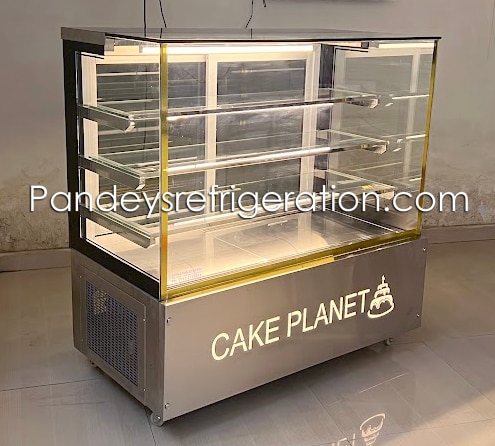 | Hotel Equipments SS Cake Display Counter with Cooling System Premium Refrigerated Cake Display Counter for Bakeries, Cafés & Restaurants Pandeys Hotel Kitchen Equipment manufactures and supplies premium-quality... View product → |
Frequently asked questions
Where can a hotel install an SS cake display counter in Nagpur?
Use it in a lobby café, buffet dessert station, banquet service area or room-service production zone. Match the counter’s format to customer traffic and service speed.
What cooling features does a Nagpur hotel cake counter need?
Choose an enclosed refrigerated cabinet for cream-based desserts. Specify cooling performance for Nagpur’s hot conditions, along with suitable glass, drainage and temperature recovery.
How should hotels load cakes and desserts into the counter?
Leave the cold-air paths clear, avoid overloading shelves and keep products from blocking the evaporator outlet or return air. Load lemon meringue, mango mousse, tiramisu and ganache according to their handling needs.
What should a hotel check before accepting a locally purchased cake display counter?
Test temperature stability, recovery after door opening, visibility through the glass, drainage, access for cleaning and available capacity before signing off the installation.
Keywords