A mortuary cabinet must preserve remains, support controlled handling, and withstand repeated cleaning in a hot, humid hospital environment. By the end, you will know which stainless-steel details, temperature controls, capacity measurements, electrical provisions, and service records to compare before approving a purchase.
Key takeaways
- Inspect welds, door seals, drainage and insulation before accepting a mortuary freezer.
- Specify stable cooling, high-temperature alarms and backup power for preservation.
- Measure doorways, lift access and floor space before choosing cabinet capacity.
- Request service coverage, warranty terms and installation documentation from the Nagpur supplier.
Why stainless steel suits Nagpur hospital mortuaries
A stainless steel cabinet handles the wet, repetitive work of a busy Nagpur mortuary better than a painted mild-steel, aluminium, or polymer-bodied cabinet—provided its welds, joints, drain, and insulation are properly finished.
| Material | Practical advantage | Limitation to check |
|---|---|---|
| Stainless steel | Non-porous, washable, resistant to scratches, dents, and routine wet cleaning; SS 304 suits most interior body-contact surfaces. | Chloride cleaners and saline residue can cause tea-staining or pitting; rough welds and open seams still trap contamination. |
| Painted mild steel | Lower purchase cost and adequate rigidity when the coating remains intact. | A scratch at a door threshold, weld, or wet floor area exposes steel to rust; repainting disrupts use and does not repair hidden corrosion. |
| Aluminium | Lightweight and naturally corrosion-resistant in many conditions. | Softer metal dents during trolley handling, and damaged joints or mixed-metal fittings complicate cleaning and repairs. |
| Polymer-bodied cabinet | Smooth surfaces and resistance to many cleaning chemicals. | Impact damage, ageing, odour retention, and difficult structural repairs can shorten service life in high-use areas. |
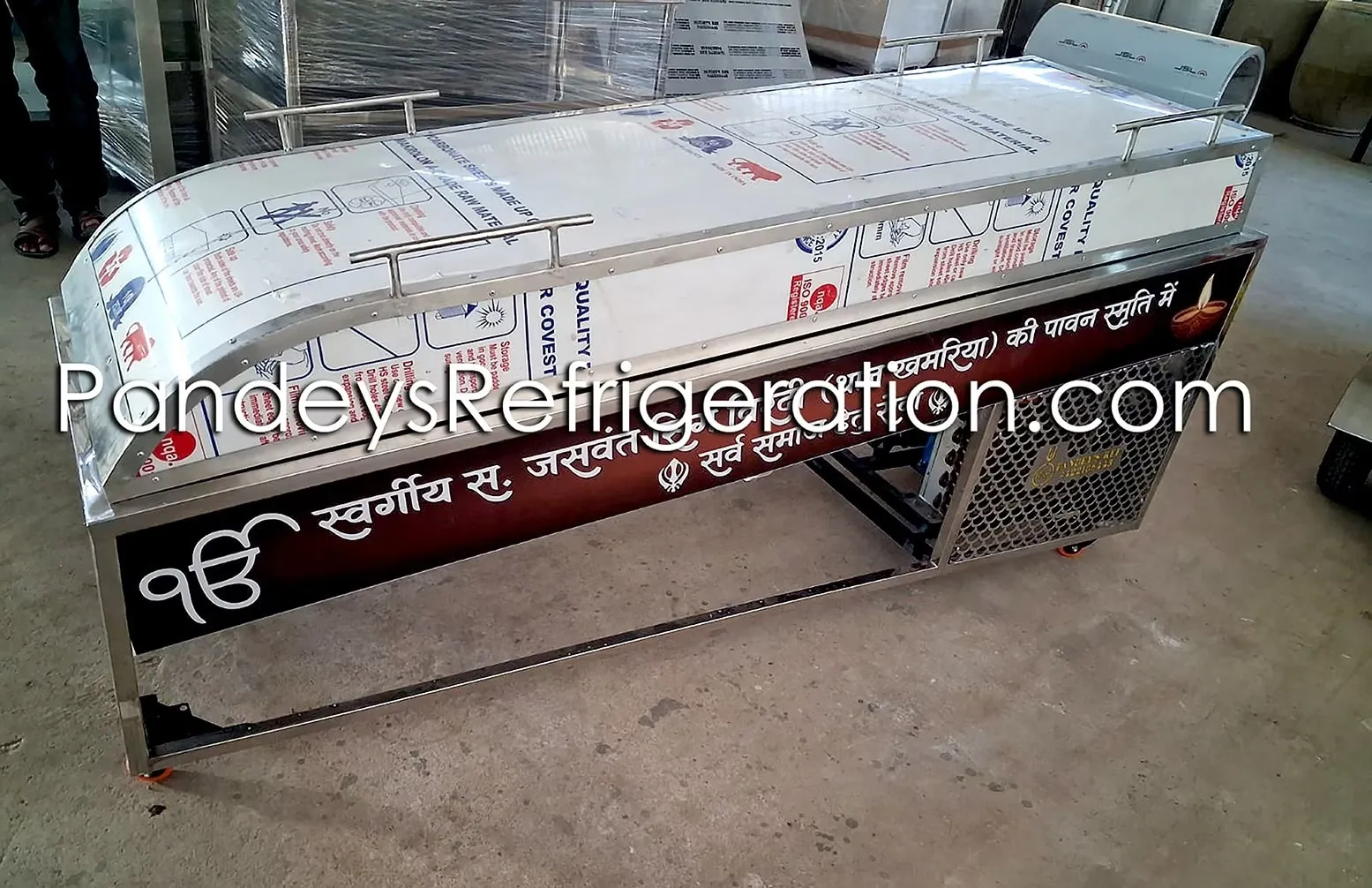
The stainless steel dead body freezer benefits in Nagpur include faster wipe-downs after leakage and less odour retention than porous or damaged surfaces. Specify a sealed, easily cleanable base, coved or sealed floor joints, and a controlled condensate drain so meltwater and cleaning water cannot collect beneath trays.
Choose SS 316 where chloride-rich cleaners or saline contamination are routine; do not pay for it everywhere without a defined reason. Leave service access around the refrigeration system, because a cabinet that requires dismantling the mortuary room turns maintenance into a shutdown.
How staff use the cabinet from admission to handover
Use a chain-of-custody procedure: one authorised staff member records admission, another verifies release, and every cabinet opening leaves a trace. A hospital dead body freezer preserves remains; it does not replace body-bag containment, personal protective equipment, hand hygiene, or infection-control procedures.
1. Record the deceased person’s full name, hospital number, date and time of admission, accompanying police or medico-legal documents, and the admitting staff member’s name. Confirm identity against the wrist tag, body bag label, and paperwork before placement.
2. Use a sealed, leak-resistant body bag and attach a second durable tag to the tray or compartment. Record the cabinet number, shelf position, operating temperature band, and entry time; use 2–4 °C for chilled short-term holding only when the storage plan calls for it.
3. Lock the cabinet or mortuary room after loading. Restrict keys, cards, or codes to authorised staff, and log every opening, inspection, transfer, and alarm response.
4. Before release, match the body, two identifiers, documents, and authorised claimant or receiving facility. Record the handover date, time, names, signatures, and condition of the seal.
5. After removal, wear appropriate PPE, inspect for leakage, remove waste through the approved route, and clean and disinfect the tray, handles, seals, floor, and contact surfaces. Check the condensate drain and dry the compartment before the next admission.
Temperature, alarms, and power continuity determine preservation
A refrigerated mortuary cabinet is not automatically a sub-zero freezer. Specify the holding purpose before choosing the equipment.
| Storage use | Temperature specification | Performance evidence |
|---|---|---|
| Short-term holding | 2–4 °C, with an agreed allowable operating tolerance | Empty-cabinet pull-down time, loaded recovery time, and readings at every shelf |
| Longer-term retention | A validated sub-zero band, such as −10 to −20 °C | Frozen-storage refrigeration, defrost cycle, insulation, and recovery records |
Require the supplier to state how quickly the empty cabinet reaches its set point and how quickly it recovers after loading. Ask for measured temperatures at the top, middle, and bottom shelves, at the front and rear, under loaded conditions; a display showing one cold spot proves little.
Specify these controls in the purchase order:
- Independent high- and low-temperature alarms with adjustable thresholds
- Door-open alarm with a delay suitable for trolley loading
- Compressor, sensor, power-failure, and controller-fault indication
- Audible alarm, visible beacon, and a remote dry contact for the hospital’s monitoring system
- Battery-backed alarm operation that remains active when the controller or mains supply fails
Connect an ss dead body freezer in Nagpur to the hospital emergency electrical supply. Use the generator for refrigeration and a separate battery-backed circuit or UPS for alarms and monitoring; a single failed circuit must not silence every warning.
Test the cabinet at Nagpur’s high ambient temperature, checking condenser ventilation, compressor load, and condensate drainage before acceptance.
Capacity and construction details decide whether the unit fits
A two-body rating does not prove that a cabinet fits. Measure the hospital’s mortuary trays, shelf pitch, door opening, trolley turning space, and loading approach; a unit can hold two bodies on paper while its shelves reject existing trays or prevent a trolley from approaching squarely.
Check these measurements before choosing a cabinet format:
- Body count and usable compartment length, width, and height for each tray
- Clear door opening, shelf spacing, tray handles, and pull-out travel
- Trolley width, turning radius, corridor width, lift dimensions, and doorway thresholds
- Cabinet footprint, rear service clearance, ceiling height, and space for future capacity
A front-loading vertical format works when a trolley can align directly with the opening. Side-by-side or multi-tier designs require more wall width but can separate access between compartments. Specify SS 304 for interior body-contact surfaces; name locations requiring SS 316 where chloride-rich cleaning residues or saline contamination are expected.
Demand smooth welded joints, a sealed or easily cleanable base, removable service panels, and a controlled condensate drain. Otherwise meltwater, cleaning water, or body-bag leakage can collect beneath trays, producing odour and hidden sanitation problems. Confirm that technicians can inspect the refrigeration system without dismantling the mortuary room.
A commercial mortuary freezer is correctly sized only after the cabinet, trolley, route, and room have been measured together.
What to demand from a Nagpur supplier before installation
Before installation, require a signed commissioning file, not a brochure. It must record empty-cabinet pull-down time, loaded recovery time, temperatures at several shelf positions, alarm verification, electrical-load data, ambient test conditions, serial numbers, and approved cleaning chemicals. Require the supplier to identify where SS 304 or SS 316 is used.
- Electrical details: voltage, phase, frequency, running current, starting current, recommended breaker, earthing requirement, and plug or isolator type. Confirm connection to the hospital’s emergency supply.
- Site checks: doorway and lift dimensions, trolley turning space, floor level, condenser ventilation, ambient-temperature limit, drain route, and clearance for compressor servicing.
- Safety checks: independent high- and low-temperature alarms, door-open alarm, fault indication, battery backup, and a tested remote alarm output. An alarm that dies with the controller is not backup.
- Service terms: response time in Nagpur, preventive-maintenance frequency, warranty exclusions, refrigerant responsibility, and written escalation contacts.
- Spares: controller, temperature probe, door gasket, fan motor, relay or contactor, alarm battery, hinges, handles, and compressor-start components.
| Record | Accept before handover | Reject or correct |
|---|---|---|
| Temperature | Calibrated readings at every shelf | One controller reading only |
| Power | Measured load and tested emergency supply | “Plug-and-play” claim |
| Service | Named technician and response time | Verbal assurance |
Whether you appoint Pandey's Refrigeration or another mortuary freezer supplier in Nagpur, make payment conditional on these records and a witnessed acceptance test.
Related product
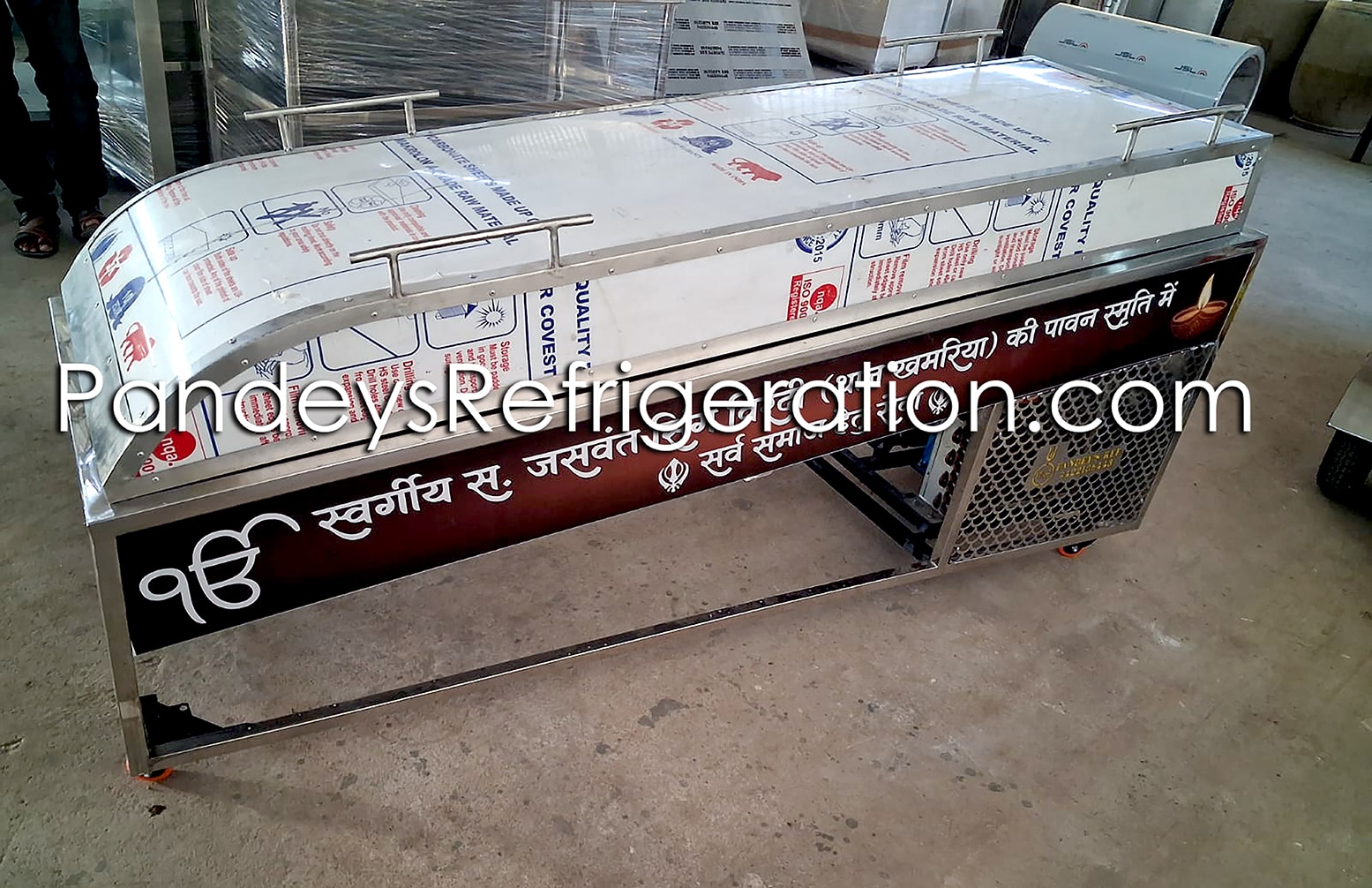 | Hospital Furniture by Pandeys Hotel Kitchen Equipment SS Dead Body Freezer Pandeys Hotel Kitchen Equipment manufactures premium-quality SS Dead Body Freezers designed... View product → |
Frequently asked questions
Why is stainless steel suitable for hospital mortuaries in Nagpur?
Stainless steel tolerates repeated cleaning, moisture and disinfectants better than painted mild steel when welds, joints and drainage are properly finished.
How is a hospital dead body freezer used from admission to handover?
Staff record the body’s identity, admission details and storage position, place it in a labelled compartment, maintain controlled cooling, and document release at handover.
What temperature and power features should a mortuary freezer have?
Specify stable temperature control, a visible temperature display, high-temperature alarms and a power-continuity plan that covers outages and service delays.
What should you check before buying a mortuary freezer in Nagpur?
Confirm external dimensions, door and lift access, tray capacity, insulation, drain layout, electrical requirements, warranty, installation support and local service response.
Keywords